Claudette Colvin, 86, passed away Tuesday while under hospice care in Texas. She played a pivotal role in ending racial segregation in America, and we honor her legacy of courage and sacrifice.
On March 2, 1955, 15-year-old Claudette Colvin was seated in the back section of a segregated city bus in Montgomery, Alabama, when the bus driver ordered her to give up her seat to a white person. Three other Black people vacated their seats, leaving available the seat next to Claudette and two seats across the aisle. But the racial segregation laws governing the buses did not allow Black and white people to sit in the same row.
The white bus driver continued to shout at her. Claudette’s decision to ignore his commands was “built on a lifetime of nasty experiences,” she told award-winning biographer Phillip Hoose. Her resolve was fortified by learning about other Black women’s courageous resistance to enslavement. “History kept me stuck to my seat,” Colvin explained. “I felt the hand of Harriet Tubman pushing down on one shoulder and Sojourner Truth pushing down on the other.”
Claudette was a member of the Montgomery NAACP Youth Council, founded and led by Rosa Parks. Through the Youth Council, Claudette and other children learned to challenge the Jim Crow status quo. Youth Council members wrote letters to Congressional representatives in support of anti-lynching legislation and repeatedly visited the segregated main library in Montgomery to attempt to check out books.
When Claudette refused to surrender her seat, the bus driver called the police and told the two officers, “I had trouble out of that ‘thing’ before.” One officer kicked Claudette before forcibly removing and arresting her. She was charged with violating segregation law, disturbing the peace, and assaulting the arresting officers, despite going limp when they dragged her off the bus.
The news of Claudette Colvin’s arrest spread swiftly throughout Montgomery’s Black community. Attorney Fred Gray agreed to represent Claudette, believing her case to be an opportunity to challenge Montgomery and Alabama’s segregation statutes on constitutional grounds.
At trial, the arresting officer told the juvenile court judge that Claudette “insisted she was colored and just as good as white.” Claudette was convicted on all counts, declared a ward of the State, and placed on indefinite probation ”pending good behavior.” She never had any other arrests, but as NPR reported in 2021, she never received official notice that she had completed probation and family members said they feared she could be arrested for any reason.
In October 2021, at age 82, Colvin asked the juvenile court to expunge her record, explaining that she no longer wanted to be considered a “juvenile delinquent.” Her request was granted in December and her juvenile arrest record was expunged. She had sought to have her name cleared to “show the generation growing up now that progress is possible, and things do get better,” Colvin said. “It will inspire them to make the world better.”
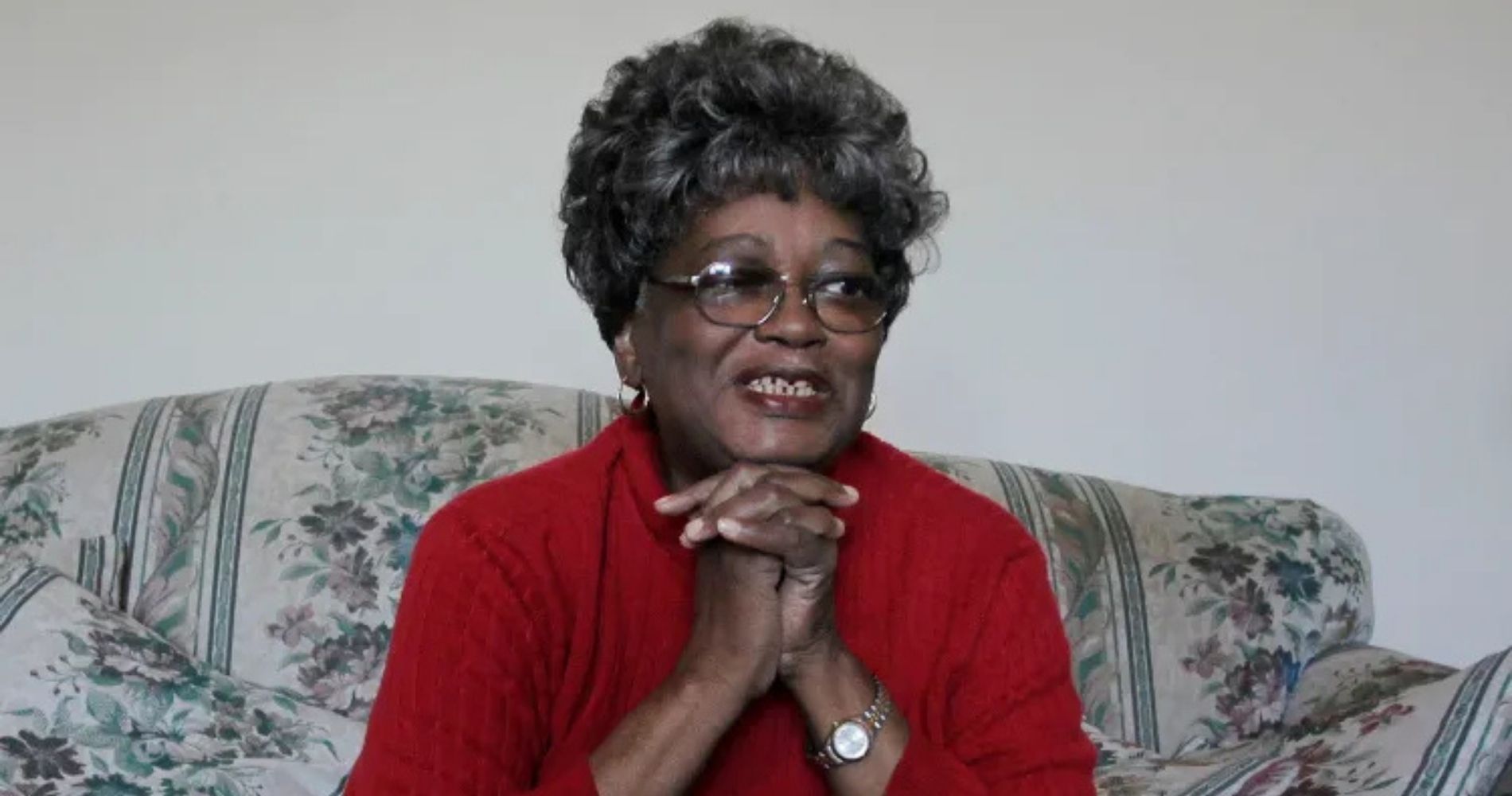
Claudette’s courageous action and outrageous conviction galvanized Montgomery’s Black community. Fred Gray credited Colvin with helping to ignite the Montgomery Bus Boycott, telling The Washington Post, “Claudette gave all of us the moral courage to do what we did.”
On February 1, 1956, Fred Gray and Charles D. Langford filed Browder v. Gayle, a federal lawsuit challenging the constitutionality of segregation statutes on city buses in Montgomery. Claudette and the other three named plaintiffs—Aurelia Browder, Mary Louise Smith, and Susie McDonald—were all women arrested between March and October 1955 for refusing to give up their seats on city buses to white passengers.
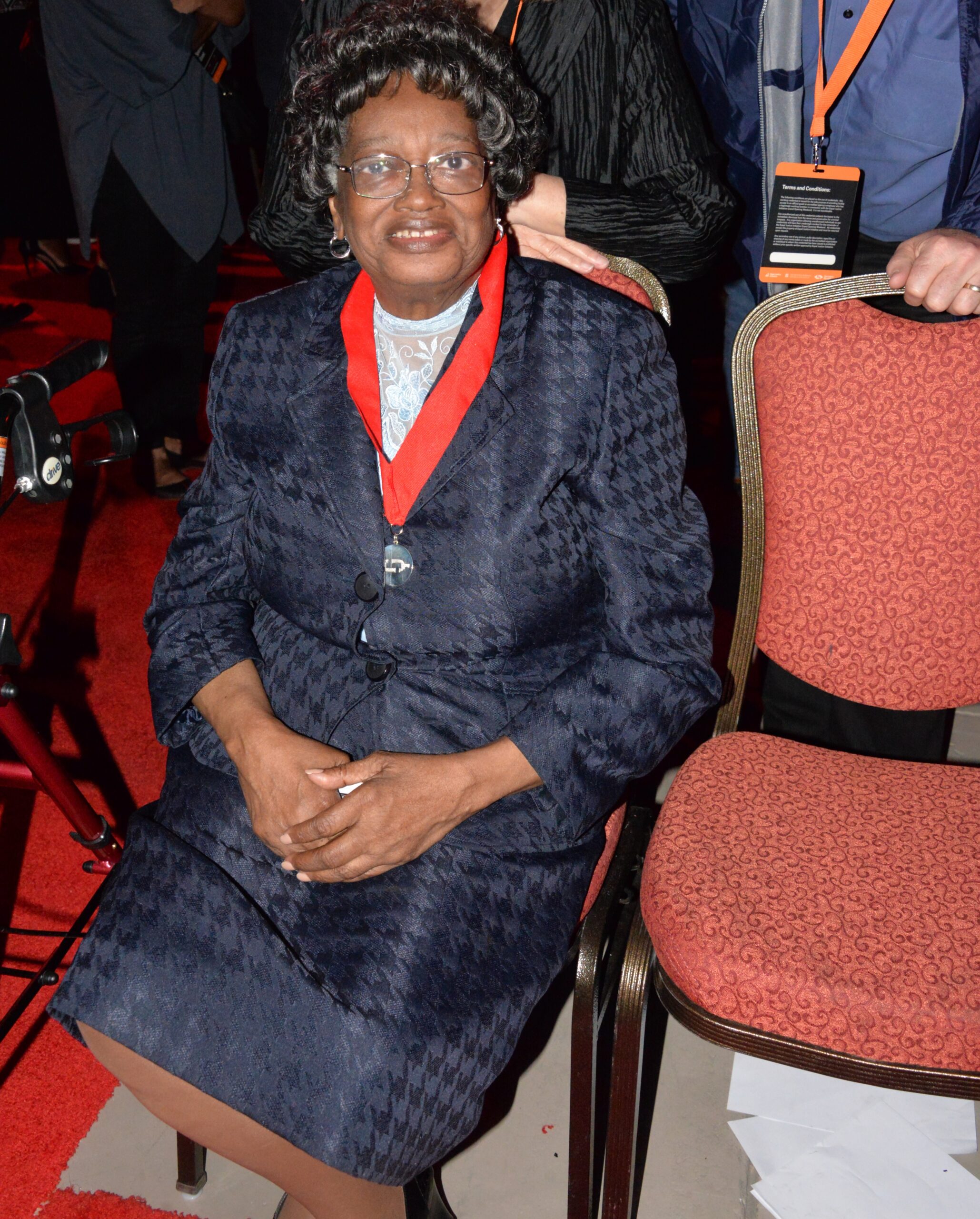
Claudette Colvin was honored at the opening of the Legacy Sites in 2018.
The lawsuit alleged that segregation statutes violated the Fourteenth Amendment of the Constitution, which guarantees equal protection under the law, and called for an injunction barring city officials from enforcing the segregation statutes.
On May 11, 1956, a three-judge district court convened to hear the case. Each of the plaintiffs, who had suffered humiliation and arrests for violating the segregation law, described that they had ridden city buses multiple times daily before the start of the bus protest but willingly joined with others in Montgomery’s Black community to stop riding buses “because we were treated wrong, dirty and nasty.”
“We haven’t changed our ideas [about segregation]. It has been in me ever since I was born,” Claudette Colvin told the court. “Our leaders is just we ourself.”
The federal district court on June 4, 1956, struck down Montgomery’s segregated buses as illegal, but the city refused to integrate and instead launched an appeal. The Supreme Court upheld the ruling on November 13, 1956. Five thousand white people attended a Ku Klux Klan rally in Montgomery to protest the decision and burned a 40-foot cross outside city limits off Old Selma Road.
On December 18, the Montgomery Board of Commissioners released an emphatic statement declaring that they would “forever stand like a rock against social equality, intermarriage, and mixing of the races in the schools.” The Supreme Court ended the city’s appeals two days later and ordered the immediate implementation of integration under Browder v. Gayle. On December 21, 1956, racial segregation on public transportation in Montgomery ended.
EJI honored Ms. Colvin in 2018 at the opening of the Legacy Sites in Montgomery. She posed with Mary Louise Smith, another plaintiff in Browder v. Gayle. “When it comes to justice, there is no easy way to get it. You can’t sugarcoat it,” Colvin told her biographer. “You have to take a stand and say, ‘This is not right.’”