Sidebar
Martyrs of the Movement
Civil rights activism was extremely dangerous, and its opponents often responded to peaceful protests with violence. Scores of people lost their lives in racially motivated violence and lynchings.
At the completion of the Selma to Montgomery March for voting rights in March 1965, the Rev. Dr. Martin Luther King Jr. spoke to tens of thousands of people gathered at the Alabama State Capitol about the need to honor the sacrifices of the many who were killed. “We must go on and be sure that they did not die in vain,” he said. “The pattern of their feet as they walked through Jim Crow barriers in the great stride toward freedom is the thunder of the marching men of Joshua, and the world rocks beneath their tread.”1 Martin Luther King Jr., “Our God Is Marching On,” American Public Media, accessed Jan. 12, 2026.
The deaths of the 34 people listed below had profound impacts on the community of activists who organized, boycotted, and marched to advance racial justice.
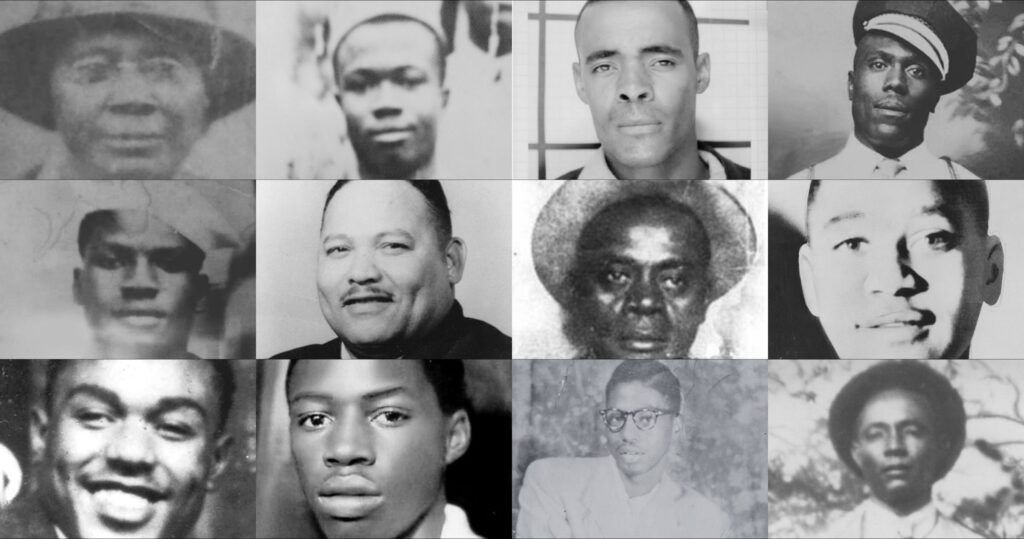
Otis Parham | June 18, 1934 | Montgomery County, Alabama
A mob of white men beat and shot to death a 16-year-old Black boy named Otis Parham, the 12th documented victim of racial terror lynching in Montgomery County since 1890.2 “Hunt for Slayer Spurred by Death,” Birmingham Age-Herald, June 19, 1934; Equal Justice Initiative, Lynching in America: A Community Remembrance Project (2016), 11.
Niecey Brown | June 12, 1945 | Selma, Alabama
Niecey Brown, a 74-year-old Black woman, died from injuries after an off-duty white police officer named George Booker forcibly entered her house and beat her with a bottle. After only minutes of deliberation, Booker was acquitted by an all-white jury.3 Equal Justice Initiative, Segregation in America; Equal Justice Initiative, “Jun 12, 1945: White Police Officer Beats Elderly Black Woman to Death,” A History of Racial Injustice, accessed Oct. 30, 2025.
Timothy Hood | February 8, 1946 | Bessemer, Alabama
Honorably discharged U.S. Marine Timothy Hood removed a sign separating Black and white passengers on a streetcar in Bessemer. In response, the white streetcar conductor, William R. Weeks, unloaded his pistol into Mr. Hood, firing five shots. Mr. Hood staggered away, only to be arrested by the chief of police, who put Mr. Hood in the back of a police car and murdered him with a single bullet to the head.4 Equal Justice Initiative, Lynching in America: Targeting Black Veterans (2016), 40.
Mary Lizzie Norris | May 4, 1947 | Camp Hill, Alabama
Mary Lizzie Norris, a 22-year-old pregnant woman, was killed when a white mob, which included police officers, terrorized a Black neighborhood in Camp Hill and fired indiscriminately on Black patrons in a segregated cafe.5 “Anti-Lynch Law Urged at Rally,” Alabama Tribune (Montgomery), July 4, 1947; “Killing of Mary Lizzie Norris,” CRRJ Archive, accessed Jan. 12, 2026.
Fred Johnson | June 11, 1947 | Montgomery, Alabama
Fred Johnson was the victim of a racial terror lynching in Pike County, Alabama, after being accused of being a “nuisance” and looking into a window at a white woman. After he was beaten and shot, police arrested him and incarcerated him at Old Kilby Prison in Montgomery County, where he died three days later.6 Equal Justice Initiative, internal files, “From Debbie Stringer;” “Murder Theft Arrests Made in Pike County,” Troy Messenger, June 13, 1947.
Elmore Bolling | December 4, 1947 | Lowndes County, Alabama
Elmore Bolling, a successful Black businessman, was lynched near his general store by white mob members resentful of the economic competition.7 National Park Service, “Elmore Bolling Marker,” accessed Oct. 30, 2025.
Hilliard Brooks Jr. | August 13, 1950 | Montgomery, Alabama
Police fatally shot Hilliard Brooks Jr., a Black World War II veteran, after a fare dispute with a white bus driver on a Montgomery bus.8 Burns, Daybreak of Freedom, 67; “3 Wounded as Policeman Fires at Negro,” Montgomery Advertiser, Aug. 13, 1950; “Hilliard Brooks Jr.,” U.S. Find a Grave Index, 1600s-Current, Ancestry.com, accessed July 22, 2025; Karen Gray Houston, “How Brutality at Times Paves Way to Progress,” Montgomery Advertiser, updated Feb. 20, 2015; Robinson, The Montgomery Bus Boycott, 21.
The Rev. George Lee | May 7, 1955 | Belzoni, Mississippi
A local NAACP leader and voter registration activist, the Rev. George Lee was shot and killed after refusing demands by White Citizens’ Council members to remove his name from voter rolls.9 Equal Justice Initiative, “May 07, 1955;” “May 7, 1955: Murder of Rev. George W. Lee,” Zinn Education Project, accessed Jan. 12, 2026.
Lamar “Ditney” Smith | August 13, 1955 | Brookhaven, Mississippi
A 63-year-old World War I veteran and farmer, Lamar Smith was shot and killed on the courthouse lawn by white men who opposed his voting rights activism.10 Equal Justice Initiative, “Aug 13, 1955: The History of Violent Opposition to Black Political Participation,” A History of Racial Injustice, accessed Jan. 12, 2026.
Emmett Till | August 28, 1955 | Drew, Mississippi
Two white men kidnapped and lynched a 14-year-old Black boy named Emmett Till in the Mississippi Delta. Emmett was severely beaten, shot, mutilated, and thrown into the Tallahatchie River, where his remains were found days later.11 Equal Justice Initiative, “Aug 28, 1955: Emmett Till Abducted and Murdered in Mississippi Delta,” A History of Racial Injustice, accessed Oct. 30, 2025; Equal Justice Initiative, “Racial Violence in the 1950s.”
Willie Edwards Jr. | January 22, 1957 | Montgomery, Alabama
A group of white men, enraged by rumors that a Black truck driver was dating a white woman, ambushed a delivery truck driven by a different Black man, 24-year-old Willie Edwards Jr. The mob kidnapped and beat Mr. Edwards. He was then lynched on a bridge over the Alabama River.12 Thornton, Dividing Lines, 94; “Willie Edwards, Jr.—Notice to Close File.”
Rogers Hamilton | October 22, 1957 | Lowndesboro, Alabama
An 18-year-old Black man named Rogers Hamilton was abducted from his home by two white men and fatally shot for waving at a white girl.13 John Fleming, “He Waved at a White Woman in Alabama in 1957, Witness Now Says. His Murder Remains Unsolved,” AL.com, updated Jan. 20, 2025.
Jeremiah Reeves | March 28, 1958 | Montgomery, Alabama
Despite protests from Black community leaders, including the Rev. Dr. Martin Luther King Jr. and Rosa Parks, the State of Alabama executed Jeremiah Reeves, who had been arrested for an interracial affair and tortured by police into giving a false confession. Police strapped the frightened 16-year-old into the electric chair and told him he would be electrocuted unless he admitted to having committed all of the rapes white women reported that summer.14 Equal Justice Initiative, “Mar 28, 1958;” Neely Tucker, “The Case That ‘Gutted’ Rosa Parks,” Library of Congress, Feb. 4, 2022.
Herbert Lee | September 25, 1961 | Liberty, Mississippi
A farmer and voting rights activist, Herbert Lee was confronted about his efforts to register Black voters by a white legislator, who then shot and killed him. Witnesses to Mr. Lee’s murder were intimidated by the sheriff to falsely corroborate the legislator’s claim of self-defense.15 “Sept. 25, 1961: Murder of Herbert Lee,” Zinn Education Project, accessed Jan. 12, 2026; “Herbert Lee,” SNCC, accessed Jan. 12, 2026; Jerry Mitchell, “1961: White Man Kills Herbert Lee,” Mississippi Today, Sept. 25, 2023, accessed Jan. 12, 2026.
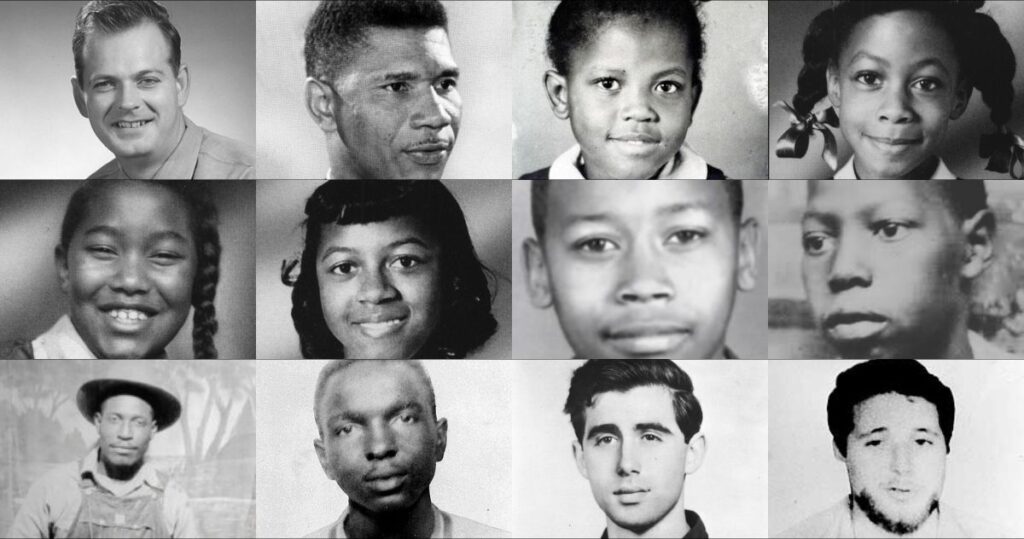
William Lewis Moore | April 23, 1963 | Attalla, Alabama
A Ku Klux Klansman shot and killed William Lewis Moore, a white postal worker from Baltimore who was marching from Chattanooga, Tennessee, to Jackson, Mississippi, to hand-deliver a letter to the governor urging an end to segregation.16 “April 23, 1963: White Civil Rights Activist Murdered on Racial Justice Walk in Alabama,” Zinn Education Project, accessed Oct. 31, 2025; Jerry Mitchell, “On This Day in 1963,” Mississippi Today, April 23, 2025, accessed Jan. 12, 2026.
Medgar Evers | June 12, 1963 | Jackson, Mississippi
World War II veteran and NAACP field secretary Medgar Evers was shot in the back and killed in the driveway of his home by a white Ku Klux Klan member.17 “Medgar Evers,” NAACP, accessed Jan. 12, 2026.
Addie Mae Collins | September 15, 1963 | Birmingham, Alabama
Fourteen-year-old Addie Mae Collins was one of four Black girls killed by members of the Ku Klux Klan who bombed the 16th Street Baptist Church in Birmingham, Alabama. Addie, the three other girls, and Addie’s younger sister Sarah, who survived, were in the church’s basement when the bomb exploded.18 Equal Justice Initiative, “Sep 15, 1963: Four Black Girls Killed in Church Bombing in Birmingham, Alabama,” A History of Racial Injustice, accessed Oct. 9, 2025; Tom Lankford and Irving Beiman, “The Day a Church Became a Tomb,” Birmingham News, Sept. 16, 1963; “Four Little Girls,” National Park Service, updated March 23, 2016, accessed Jan. 12, 2026.
Carol Denise McNair | September 15, 1963 | Birmingham, Alabama
Eleven-year-old Carol Denise McNair was one of four Black girls killed by members of the Ku Klux Klan who bombed 16th Street Baptist Church in Birmingham, Alabama.19 Equal Justice Initiative, “Sep 15, 1963;” Lankford and Beiman, “The Day a Church Became a Tomb.”
Carole Robertson | September 15, 1963 | Birmingham, Alabama
Fourteen-year-old Carole Robertson was one of four Black girls who were killed by members of the Ku Klux Klan who bombed the 16th Street Baptist Church in Birmingham, Alabama.20 Equal Justice Initiative, “Sep 15, 1963;” Lankford and Beiman, “The Day a Church Became a Tomb.”
Cynthia Wesley | September 15, 1963 | Birmingham, Alabama
Fourteen-year-old Cynthia Wesley was one of four Black girls who were killed by members of the Ku Klux Klan who bombed the 16th Street Baptist Church in Birmingham, Alabama.21 Equal Justice Initiative, “Sep 15, 1963;” Lankford and Beiman, “The Day a Church Became a Tomb.”
Virgil Lamar Ware | September 15, 1963 | Birmingham, Alabama
Thirteen-year-old Virgil Lamar Ware was shot and killed by white teenagers who had attended a National States’ Rights Party rally opposing integration, on the same day the 16th Street Baptist Church was bombed.22 Liz Ryan, “The 1963 Murder of Virgil Lamar Ware and a Fight for Remembrance,” Alabama Political Reporter, May 15, 2025.
Johnny Robinson | September 15, 1963 | Birmingham, Alabama
Hours after the bombing at 16th Street Baptist Church, white teenagers waving Confederate flags and shouting racist slurs taunted Johnny Robinson and other Black teenagers. When police arrived, Johnny was shot in the back and killed by a white Birmingham police officer.23 Carrie Johnson, “Johnny’s Death: The Untold Tragedy in Birmingham,” NPR, Sept. 15, 2010; “Johnnie Robinson,” U.S. Department of Justice, Civil Rights Division, updated Oct. 6, 2016.
Louis Allen | January 31, 1964 | Liberty, Mississippi
Louis Allen, a 44-year-old World War II veteran, was ambushed outside his property and shot twice in the face with a shotgun after providing evidence to the FBI about the murder of Herbert Lee, a local voting rights activist who was murdered by a white legislator for registering Black voters.24 Equal Justice Initiative, “Jan 31, 1964: Louis Allen Ambushed and Murdered for Speaking Out in Liberty, Mississippi,” A History of Racial Injustice, accessed Jan. 12, 2026.
James Chaney | June 21, 1964 | Philadelphia, Mississippi
James Chaney was one of three civil rights workers with the Congress of Racial Equality (CORE) who were jailed by a Neshoba County deputy sheriff—a member of the Ku Klux Klan—and went missing after their release. Their station wagon was found burned and the three men were found shot to death and buried in a shallow grave.25 Equal Justice Initiative, “Aug 04, 1964: Missing Civil Rights Workers Found Dead in Mississippi,” A History of Racial Injustice, accessed Jan. 9, 2026; “Mississippi Burning,” FBI, accessed Jan. 12, 2026.
Andrew Goodman | June 21, 1964 | Philadelphia, Mississippi
Andrew Goodman was a new member of CORE when he went missing with his two fellow civil rights workers, James Chaney and Michael Schwerner. After an extensive search for nearly two weeks, their bodies were found shot and buried in a shallow grave.26 Equal Justice Initiative, “Aug 04, 1964;” “Mississippi Burning.”
Michael Schwerner | June 21, 1964 | Philadelphia, Mississippi
A white New Yorker working with CORE, Michael Schwerner was targeted by a Neshoba County deputy sheriff and was killed alongside James Chaney and Andrew Goodman by members of the Ku Klux Klan.27 Equal Justice Initiative, “Aug 04, 1964;” “Mississippi Burning.”
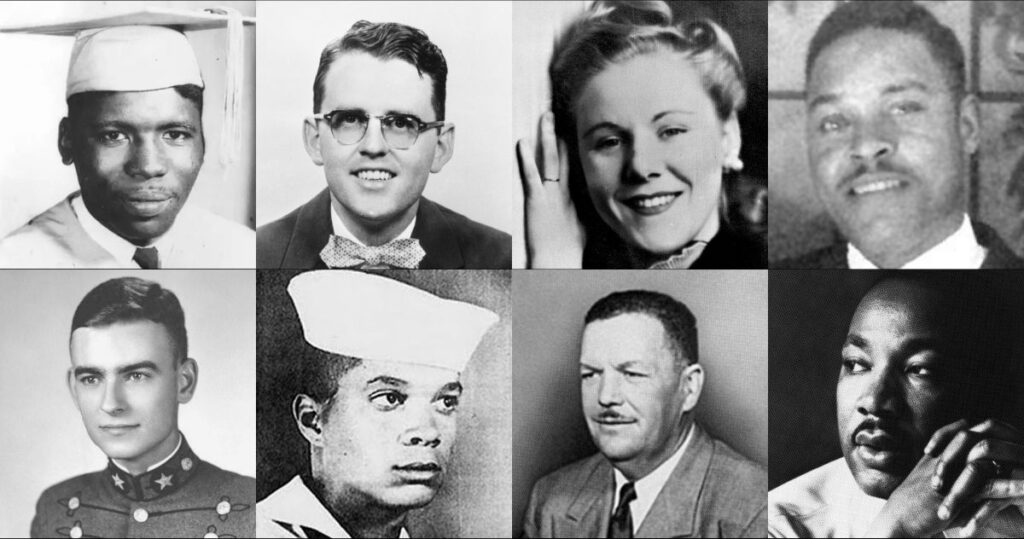
Jimmie Lee Jackson | February 26, 1965 | Selma, Alabama
An Alabama state trooper fatally shot Jimmie Lee Jackson during a peaceful march in Marion, Alabama, to protest the arrest of civil rights leader James Orange. He died eight days later in Selma.28 Equal Justice Initiative, “Feb 18, 1965: Alabama State Trooper Murders Jimmie Lee Jackson,” A History of Racial Injustice, accessed Oct. 9, 2025; “Jackson, Jimmie Lee,” Martin Luther King, Jr. Research and Education Institute, accessed Feb. 18, 2026.
The Rev. James Reeb | March 11, 1965 | Birmingham, Alabama
The Rev. James Reeb, a 38-year-old white Unitarian minister who traveled from Boston to Selma for the Selma to Montgomery March, died from injuries in a Birmingham hospital after being beaten in Selma by a group of white men who opposed his civil rights work.29 Equal Justice Initiative, “Mar 11, 1965: White Minister Beaten Following Selma March, Dies from Injuries,” A History of Racial Injustice, accessed Oct. 9, 2025; “Reeb, James,” Martin Luther King, Jr. Research and Education Institute, accessed Oct. 9, 2025.
Viola Liuzzo | March 25, 1965 | Lowndesboro, Alabama
Members of the Ku Klux Klan shot and killed Viola Gregg Liuzzo, a white voting rights activist, while she drove civil rights marchers between Montgomery and Selma after the Selma to Montgomery March.30 Mary Stanton, “Viola Gregg Liuzzo,” Encyclopedia of Alabama, updated Oct. 9, 2023.
Willie Brewster | July 18, 1965 | Anniston, Alabama
Willie Brewster was shot in the neck by members of the National States’ Rights Party, who had come from a meeting where a party leader told the crowd, “If it takes killing to get the Negroes out of the white man’s streets and to protect our constitutional rights, then I say, yes, kill them!” Mr. Brewster died three days later.31 Jerry Mitchell, “On This Day 1965: Willie Brewster Killed in Alabama,” Mississippi Today, June 18, 2025; Jean Quillen, “He Calls Himself Rev. Connie Lynch,” Anniston Star, July 19, 1965.
Jonathan Daniels | August 20, 1965 | Lowndes County, Alabama
Jonathan Daniels, a white seminary student who traveled from Boston to Alabama to help with Black voter registration in Lowndes County, was murdered by a deputy sheriff in Hayneville.32 Equal Justice Initiative, “Violence Against Civil Rights Workers,” Aug. 1, 2013; “Funeral Services Held for Jonathan Daniels,” Burlington Free Press, Aug. 25, 1965.
Sammy Younge Jr. | January 3, 1966 | Tuskegee, Alabama
After working to register Black people to vote at the Macon County Courthouse, Vietnam Navy veteran and Student Nonviolent Coordinating Committee member Sammy Younge Jr. was shot and killed for attempting to use a “white-only” restroom at a gas station.33 “Murder of Sammy Younge & SNCC’s Statement on Vietnam,” SNCC Digital Gateway, accessed Oct. 29, 2025.
Vernon Dahmer | January 10, 1966 | Hattiesburg, Mississippi
Armed Ku Klux Klan members set fire to the home and store of Vernon Dahmer, a successful Black businessman and NAACP leader active in the voting rights movement. Mr. Dahmer sustained fatal lung damage while holding off attackers as his family fled and died later that day.34 Equal Justice Initiative, “Jan 10, 1966: Voting Rights Activist Vernon Dahmer Killed in Mississippi,” A History of Racial Injustice, accessed Jan. 12, 2026.
The Rev. Dr. Martin Luther King Jr. | April 4, 1968 | Memphis, Tennessee
The Rev. Dr. Martin Luther King Jr. was assassinated while standing on a hotel balcony in Memphis, Tennessee.35 Equal Justice Initiative, “Apr 04, 1968: Dr. Martin Luther King Jr. Assassinated in Memphis,” A History of Racial Injustice, accessed Oct. 30, 2025.