Sidebar
Resistance Through Revolt, Escape, and Survival
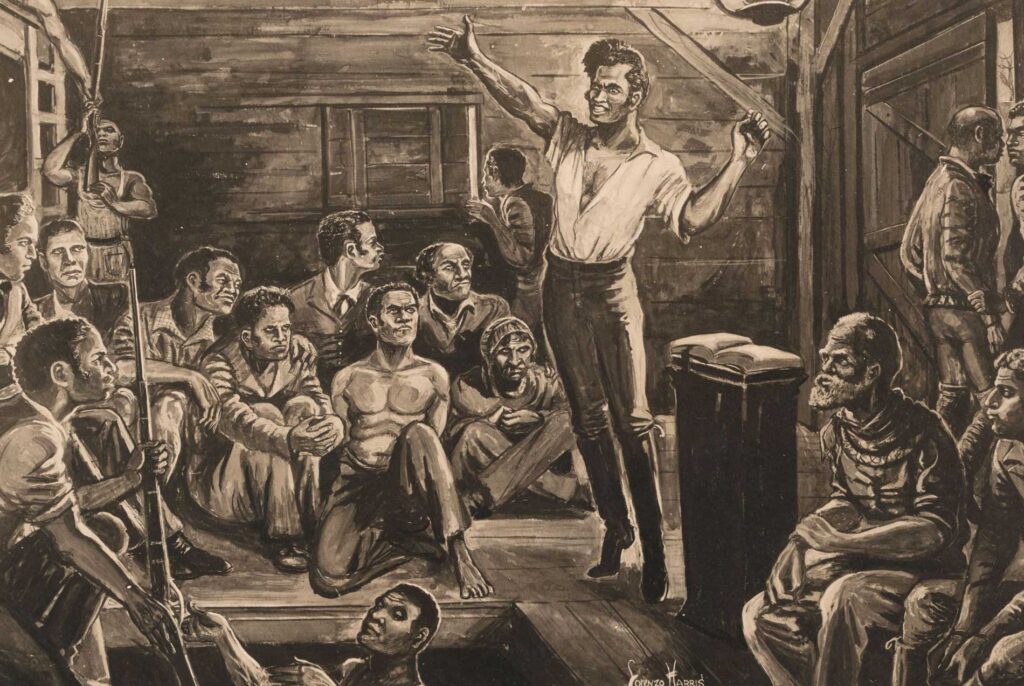
Enslaved Africans in the United States, like those throughout the Caribbean and the Americas, used a variety of tactics to resist bondage including revolts, escape, and survival. Documented revolts in Jamaica, Puerto Rico, and Suriname date back to the late 1700s.1 See Guillermo A. Baralt, Slave Revolts in Puerto Rico (Princeton, NJ: Markus Wiener Publishers, 2007). The largest rebellion in the British colonies, known as Cato’s Rebellion, took place in South Carolina in September 1739 when scores of enslaved Africans began an armed march to Spanish Florida and fought militia who tried to stop them. After the revolt, the colonial legislature passed the Negro Act of 1740, restricting the assembly, education, and movement of enslaved people, and barred importation of African slaves for 10 years.2 Jenna Gibbs, “Toussaint, Gabriel, and Three Finger’d Jack: ‘Courageous Chiefs’ and the ‘Sacred Standard of Liberty’ on the Atlantic Stage,” Early American Studies; Philadelphia (Summer 2015).
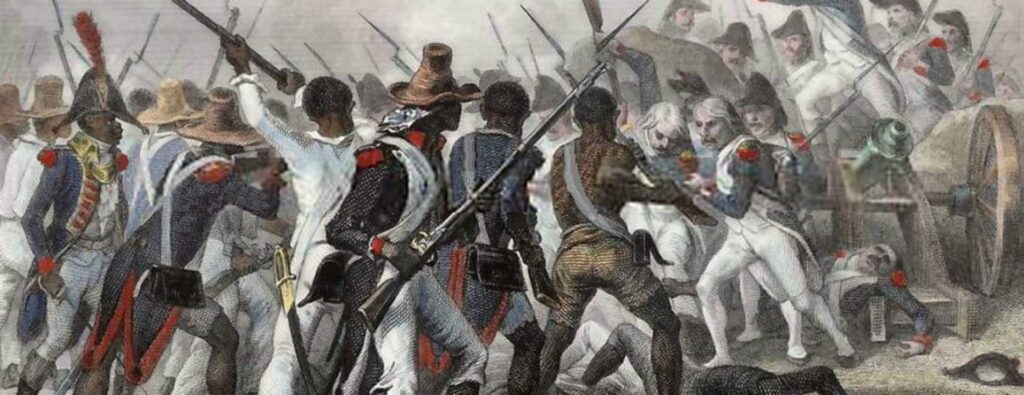
After enslaved Africans in Haiti won their freedom in 1804 following years of battle, American plantation owners suppressed domestic revolts with extraordinary violence. In 1811, federal troops and local white militia defeated a revolt by 500 enslaved people in modern-day Louisiana. Ninety-five participants were executed; the revolt’s leader, Charles Deslondes, was mutilated and dismembered; and his followers’ decapitated heads were mounted on pikes spanning 60 miles en route to New Orleans as a warning to others contemplating rebellion.3 Bobbie Booker, “Historian Takes Fresh Look at Epic Slave Revolt,” Philadelphia Tribune, January 7, 2011.
At least 30 enslaved Black people were executed in 1822 after the discovery of Denmark Vesey’s planned insurrection in Charleston, South Carolina.4 David M. Robertson, Denmark Vesey: The Buried Story of America’s Largest Slave Rebellion and the Man Who Led It (New York: Vintage Books, 2000), 110. In 1833, when enslaved minister Nat Turner led dozens of Black people on a bloody revolt against slavery in Southampton, Virginia, white forces attacked local Black communities, killing an estimated 120 people. Afterward, nearly 20 enslaved people, including Turner, were convicted and executed.5 Anthony Santoro, “The Prophet in His Own Words,” Virginia Magazine of History and Biography (Vol. 116:2, 2008). But the violent repression of anti-slavery revolts could not eliminate resistance or prevent the eventual abolition of slavery.
For many Black people, resisting enslavement meant fleeing bondage to regions that had outlawed slavery and offered the promise of freedom. Throughout the more than 240 years that chattel slavery existed in North America, enslaved people longed for freedom and attempted to escape bondage. As early as 1793, Congress enacted its first fugitive slave law, requiring residents of all states to forcibly seize and return Black people who had escaped enslavement.6 “TO PASS S. 42, AN ACT RESPECTING FUGITIVES FROM JUSTICE AND PERSONS ESCAPING FROM THE SERVICE OF THEIR MASTERS,” 861. Despite the legal obstacles and dangerous risks of running, approximately 100,000 enslaved men, women, and children managed to escape to freedom before 1865.7 Reese Renford, (2011). “Canada; The Promised Land for Slaves,” Western Journal of Black Studies (Vol. 35:3, 2011): 208–217.
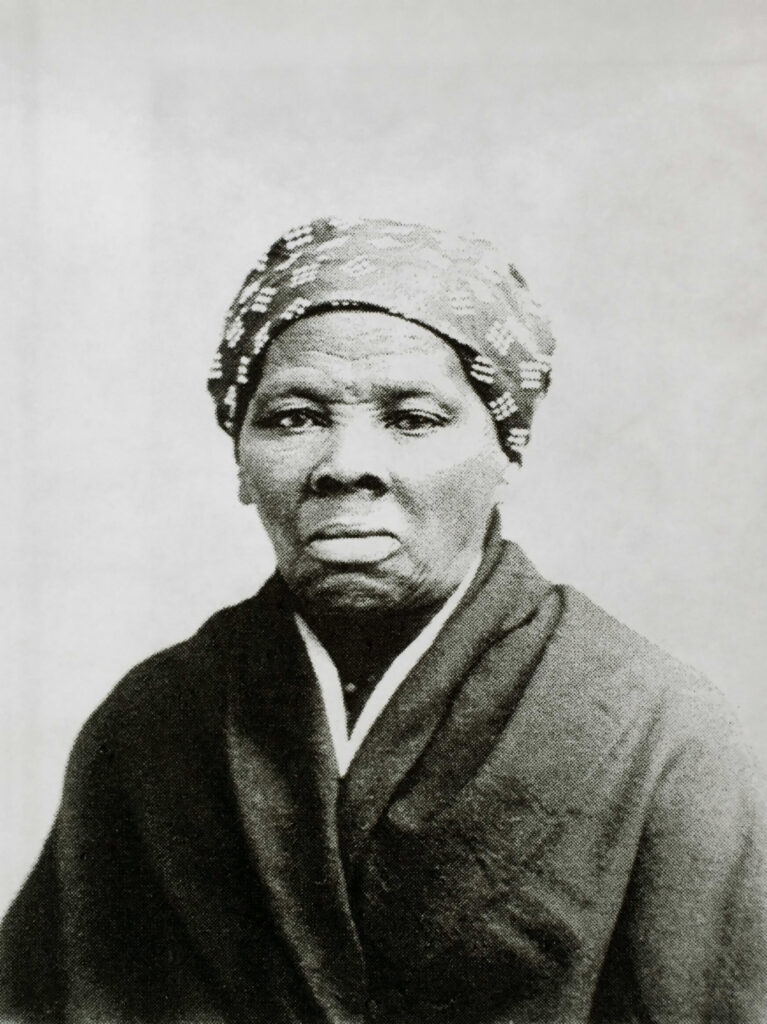
The Underground Railroad was an activist network developed to provide shelter, transportation, food, and other resources to thousands of runaways. One of its most famous and effective leaders was Harriet Tubman, a Black woman who escaped slavery in 1849 and returned to the South at least 15 times to guide more than 200 people to freedom.8 Benjamin Quarles, Black Abolitionists (New York: Oxford University Press, 1969), 146. Another leader, Henry Highland Garnet, escaped slavery as a child in 1824 and, as an adult, sheltered more than 150 runaways in his Albany, New York, home in a single year.9 Ibid., 149.
The Underground Railroad’s “conductors” risked severe punishment. When caught journeying into the South in 1847, Black abolitionist Samuel D. Burns was jailed for 14 months in Dover, Delaware; authorities later tried to sell him into slavery, but fellow abolitionists arranged to purchase and free him.10 Ibid., 162. In 1855, Alfred Wooby was sentenced to death in Bertie County, North Carolina, for hiding an enslaved person on a boat headed north.11 David S. Cecelski, The Waterman’s Song (Chapel Hill: University of North Carolina Press, 2001), 147. And in 1857, abolitionist Elijah Anderson died in a Kentucky prison while serving a sentence for transporting runaways across state lines.12 Quarles, Black Abolitionists, 162.
Indeed, American slavery was a violent, dangerous, and dehumanizing system for everyone. Those who could not escape or rebel developed cultural tools to resist through music, faith, bonds of support, and the will to keep living. Music was deeply embedded in African culture well before the launch of the Transatlantic Slave Trade, and kidnapped Africans continued that tradition by using songs to communicate and encourage one another. A white sailor who worked on trafficking voyages from 1760 to 1770 remarked that Africans on board were known to “frequently sing, the men and woman answering another, but what is the subject of their songs [I] cannot say.”13 Kenyatta D. Berry, “Singing in Slavery: Songs of Survival, Songs of Freedom,” Mercy Street Revealed citing, Marcus Rediker, The SlaveShip: A Human History (New York: Penguin Books, 2007), 282.
The songs passed through generations of enslaved African-descended people conveyed messages of sorrow and hope, and helped to forge community through work songs in the field and storytelling and dance rituals in their cabins. “A man cannot well be miserable, when he sees every one about him immersed in pleasure,” an enslaved man named Charles Ball later recalled. “I forgot for the time, all the subjects of grief that were stored in my memory, all the acts of wrong that had been perpetrated against me.”14 Baptist, The Half Has Never Been Told, 145-47.
The determination to survive despite the forces of oppressive violence was itself a form of resistance.